

Jazel Helped a Dealership Avoid Typical Website Migration Slumps, Boosting Clicks by 80% in Just 20 Days
Transitioning a dealership website to a new provider traditionally triggers a 10% to 20% temporary drop in organic traffic. This period of digital vulnerability can stall lead generation and compromise market share. For this dealership, standard migration friction meant risking immediate disruption to their online showroom, falling behind in local search rankings, and allowing agile rival dealerships to capture high-intent car shoppers during the transition gap.
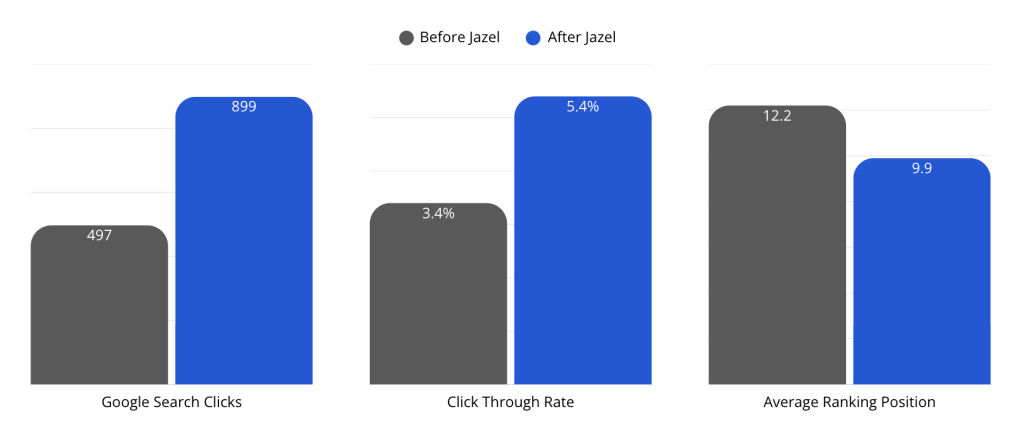
Based on performance metrics captured just 20 days after launching on the new platform, Jazel completely bypassed the standard industry migration slump. Jazel accelerated organic search performance for this automotive dealership, increasing clicks from 497 to 899 (+80%), expanding impressions from 14,600 to 16,500 (+13%), lifting click-through rates (CTR) from 3.4% to 5.4% (+59%), and improving their average search engine position from 12.2 to 9.9 (+19%).
These immediate gains were driven by Jazel’s automotive website platform, which was designed from the start with advanced SEO optimization built directly into its architecture. By ensuring technical site health, implementing seamless URL mapping, and improving inventory indexability and user experience, Jazel eliminated the typical post-migration recovery period and unlocked maximum search visibility on day one.
Business Impact
Rather than weathering a multi-week decline in traffic and web-driven sales opportunities, this car dealership achieved immediate, scalable digital growth. The 80% surge in clicks paired with an improved average search position sent an influx of organic, highly engaged shoppers directly to their vehicle inventory pages, maximizing digital showroom traffic and generating high-value leads without requiring additional ad spend to offset a migration drop.
By leveraging Jazel’s SEO-optimized platform, they were able to turn a traditionally risky platform migration into an aggressive competitive advantage. Instead of conceding ground during the transition, they fortified their local search presence, catching rival dealers off guard and capturing a disproportionate share of regional market demand right out of the gate.